Caring for contributors is not a spreadsheet — it is amanah, a trust. A neighbour gives once on the way into Jumu'ah; the masjid says JazakAllahu khairan; a relationship begins. Mohseen keeps every one of those relationships visible and cared for — without ever making giving a show, and without adding a single hour to the office week.
The job
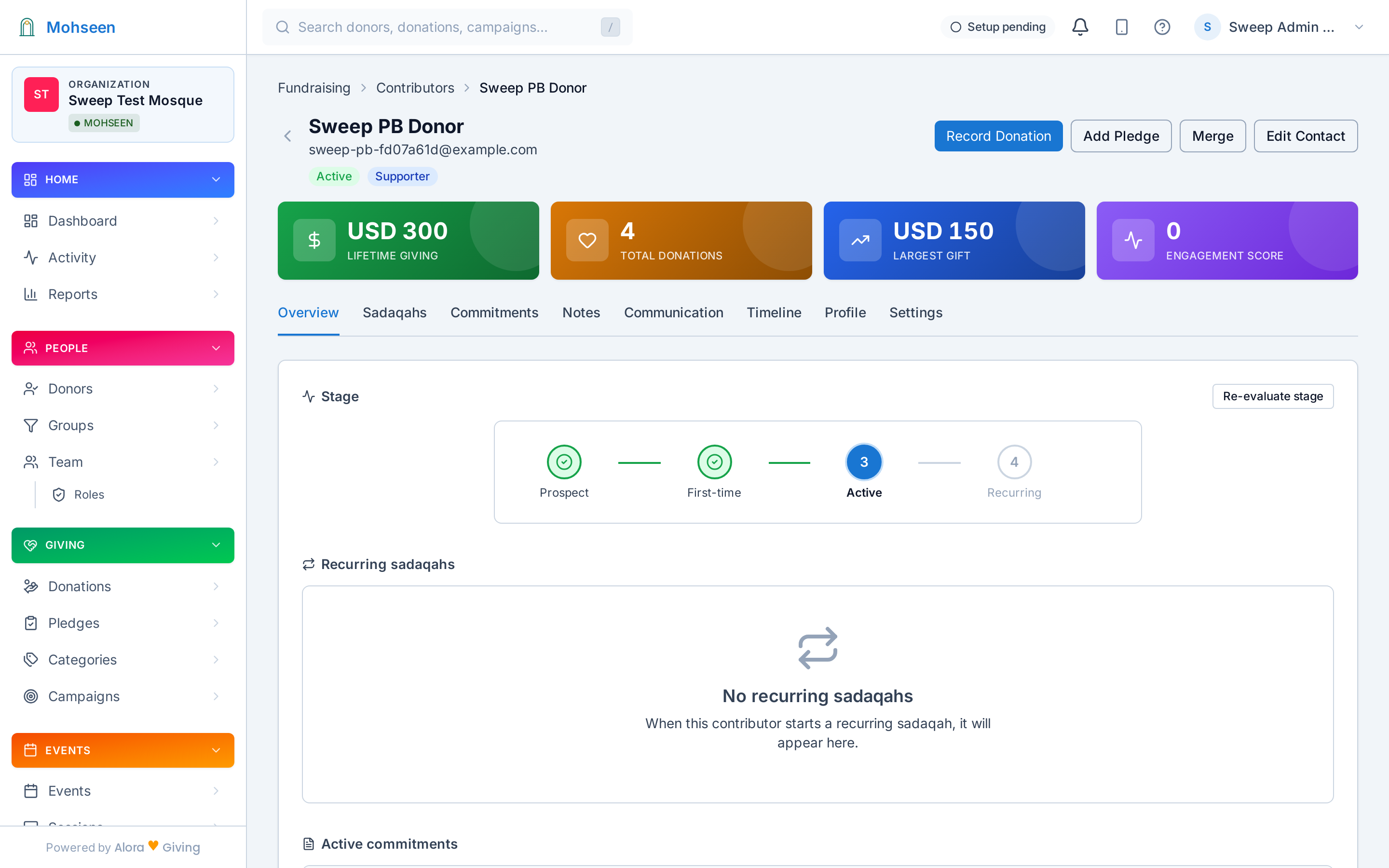
Every committed supporter of your masjid started with a single sadaqah. The work of contributor care is walking people along that path — noticing the first sadaqah, thanking well, inviting the next step quietly, and never letting a faithful contributor drift away unnoticed. Always with adab: in Islam the most beloved charity is the concealed one, so the platform is built to know contributors well while never putting their generosity on display.
One sadaqah at the Jumu'ah kiosk or from a link in the community WhatsApp group — a relationship waiting to begin.
A recurring sadaqah, a familiar name in the record, part of the masjid's weekly rhythm.
Gives zakat through the masjid, takes up commitments to the building appeal, carries the community's work.
Here is how Mohseen does that job with you — one record per contributor, segments that keep themselves current, a self-service portal every generation can use, automation your staff approves, and privacy as the default adab.
One record per contributor
The entrance-hall kiosk at the Jumu'ah rush, a sadaqah page opened from the masjid WhatsApp group on Tuesday, a live appeal at a fundraising iftar in Ramadan — it is the same person, and Mohseen knows it. Every sadaqah across all seven giving channels creates or updates one unified contributor record. No data entry, ever.
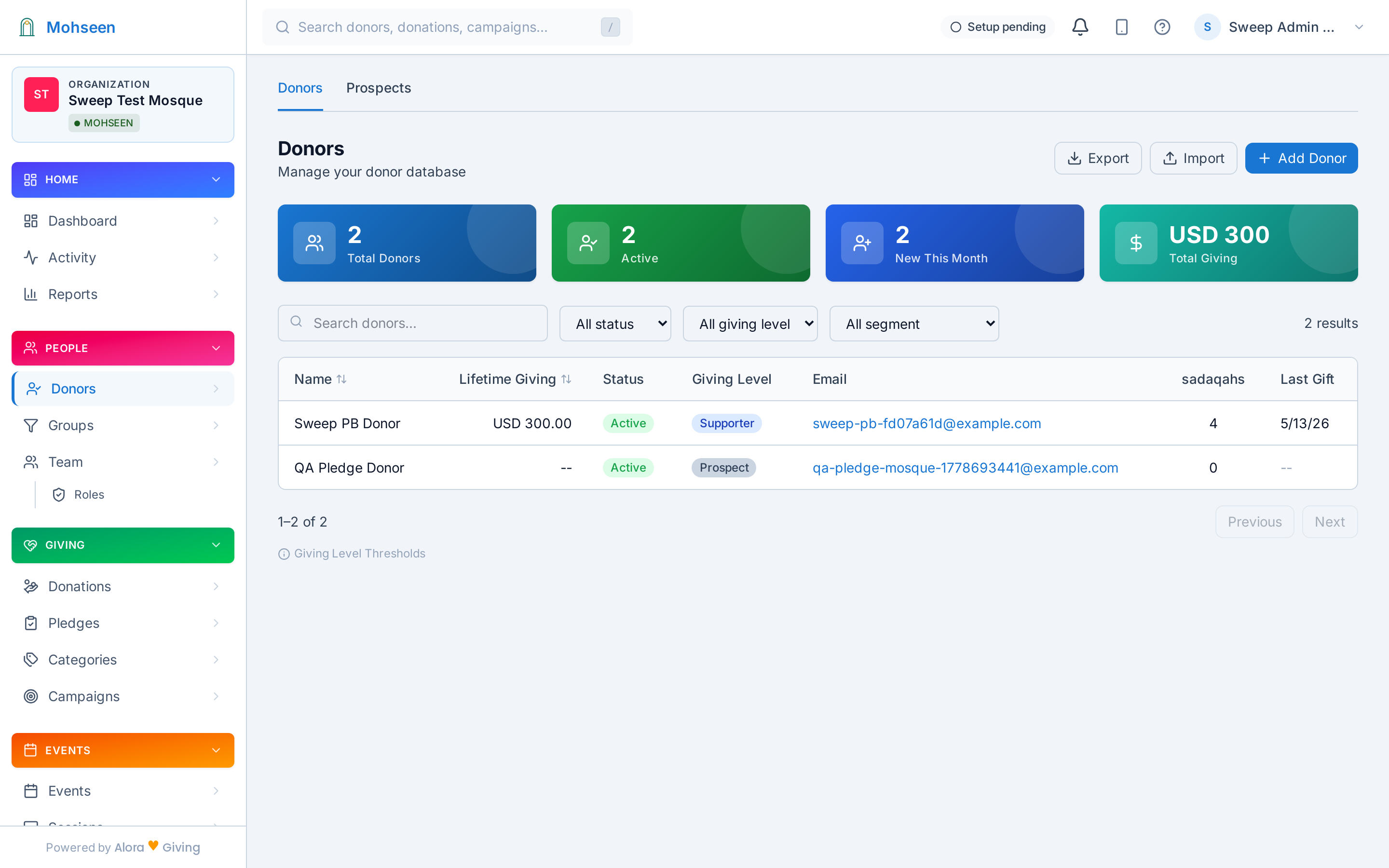
Kiosk, sadaqah page, website widget, mobile, the My Giving portal, a live appeal — wherever the sadaqah arrives, the profile is created or updated instantly. One person, one record.
Every sadaqah with date, amount, fund, and channel — and zakat always held in its own fund, never blurred into sadaqah. Lifetime totals and lifecycle stage on one screen, so the imam knows whom to thank with a quiet word.
The brother who gave by card at the kiosk and by bKash from his phone is one person, not two records. Matching profiles are flagged and merged with the full history preserved — and an audit trail of the merge.
Per-contributor annual statements and individual sadaqah receipts, generated from the record with country-aware tax formatting — no end-of-year spreadsheet marathon in the masjid office.
Segments & lifecycle
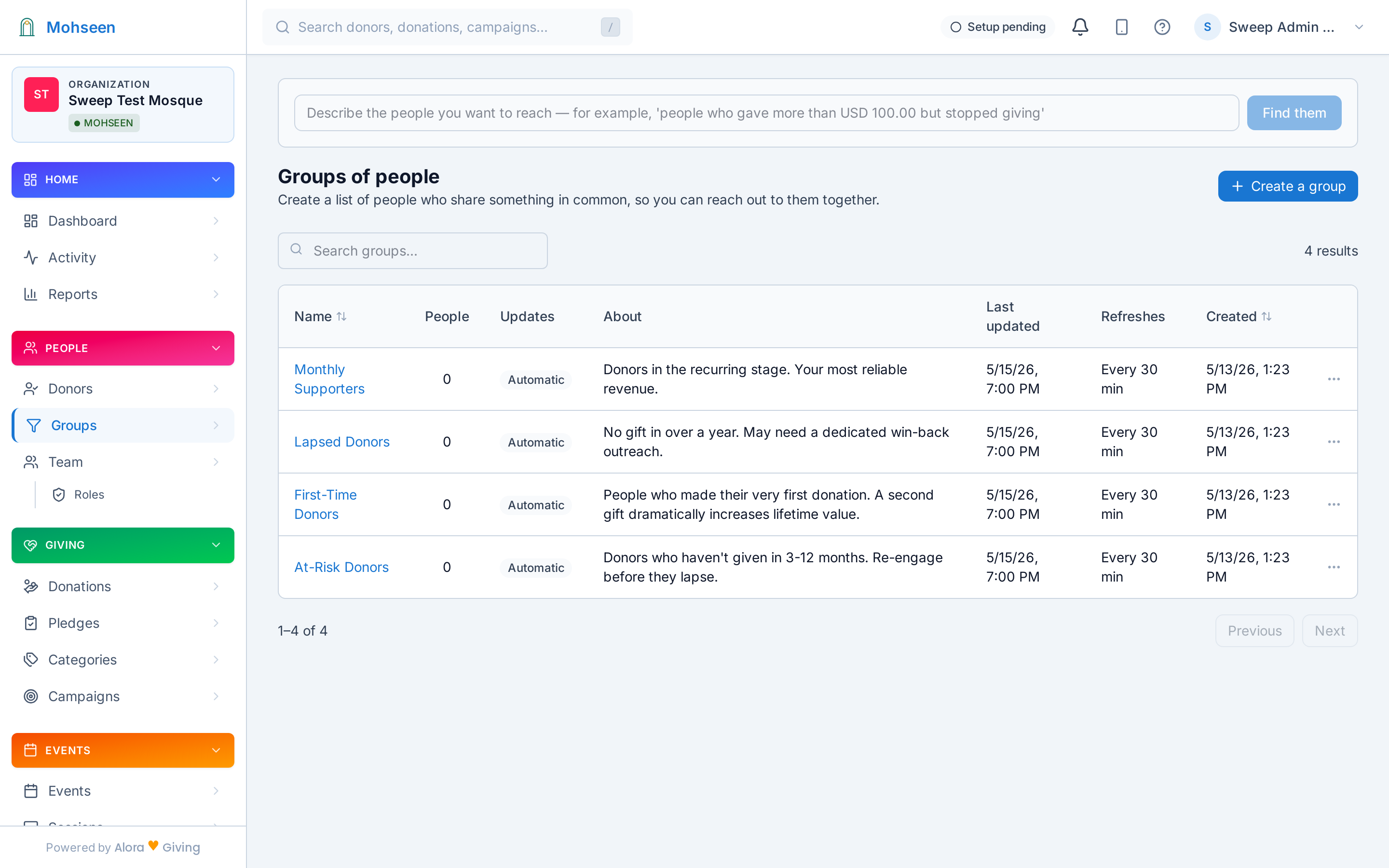
Segments update themselves as giving changes — nobody maintains a list. Describe who you are looking for in plain language and the AI builds the segment for you, with a live preview count.
A first sadaqah in the last 30 days — the moment a newcomer becomes part of the community, and the moment a warm As-salamu alaykum matters most.
Gave generously through the blessed month, quiet since Shawwal. The most important segment a masjid has — and the one a spreadsheet never surfaces.
No sadaqah in 90+ days. A respectful, brief “we've missed you” — never a collections notice, never pressure — with an easy way to give again.
Frequent giving, opened updates, event RSVPs — the people to invite to volunteer, to seat at the shura's fundraising iftar, or to thank with a personal call from the imam.
The named goal: Ramadan-to-Ramadan retention
Every masjid knows the pattern: giving rises 2–4× in Ramadan, then the months after go quiet. Mohseen treats the year after Eid as the work — the Ramadan-only segment is watched, a gentle invitation to a small recurring sadaqah goes out (with your approval), and by the new Hijri year the Ramadan contributor is still giving. Retention measured Ramadan to Ramadan, pursued with restraint — never a drumbeat of asks.
Pre-built segment templates — or describe your own in plain language and the AI builds it
The contributor self-service portal
The single biggest gift you can give the masjid office — and your contributors. Everyone who gives gets a private “My Giving” space where the things people used to call the office about, they now do themselves.
Passwordless sign-in
A contributor enters their phone number or email address, receives a short code, and they are in. Their account was created automatically with their first sadaqah — nothing to register, nothing to remember.
Phone-first sign-in works for every generation of the community — the uncle who has never owned an email address and the student who lives on her phone use the very same flow: a code to the phone in their pocket, in any browser.
A code by phone or email — the entire sign-in
Pause, resume, or cancel; change the amount; swap the card or wallet — including devotional schedules like jummah-weekly after Maghrib, ramadan-daily at iftar, zakat-annual, and sadaqah-jariyah-monthly. No call to the office.
A commitment to the building appeal with live fulfilment progress — how much given, how much remains — and the next installment paid in one click from the portal.
Individual sadaqah receipts and per-contributor annual statements as PDFs, whenever the contributor — or their accountant — needs them. Zakat clearly separated on every document.
At checkout, contributors can choose to cover the processing fees so the full sadaqah reaches the masjid.
Lifecycle automation, with adab
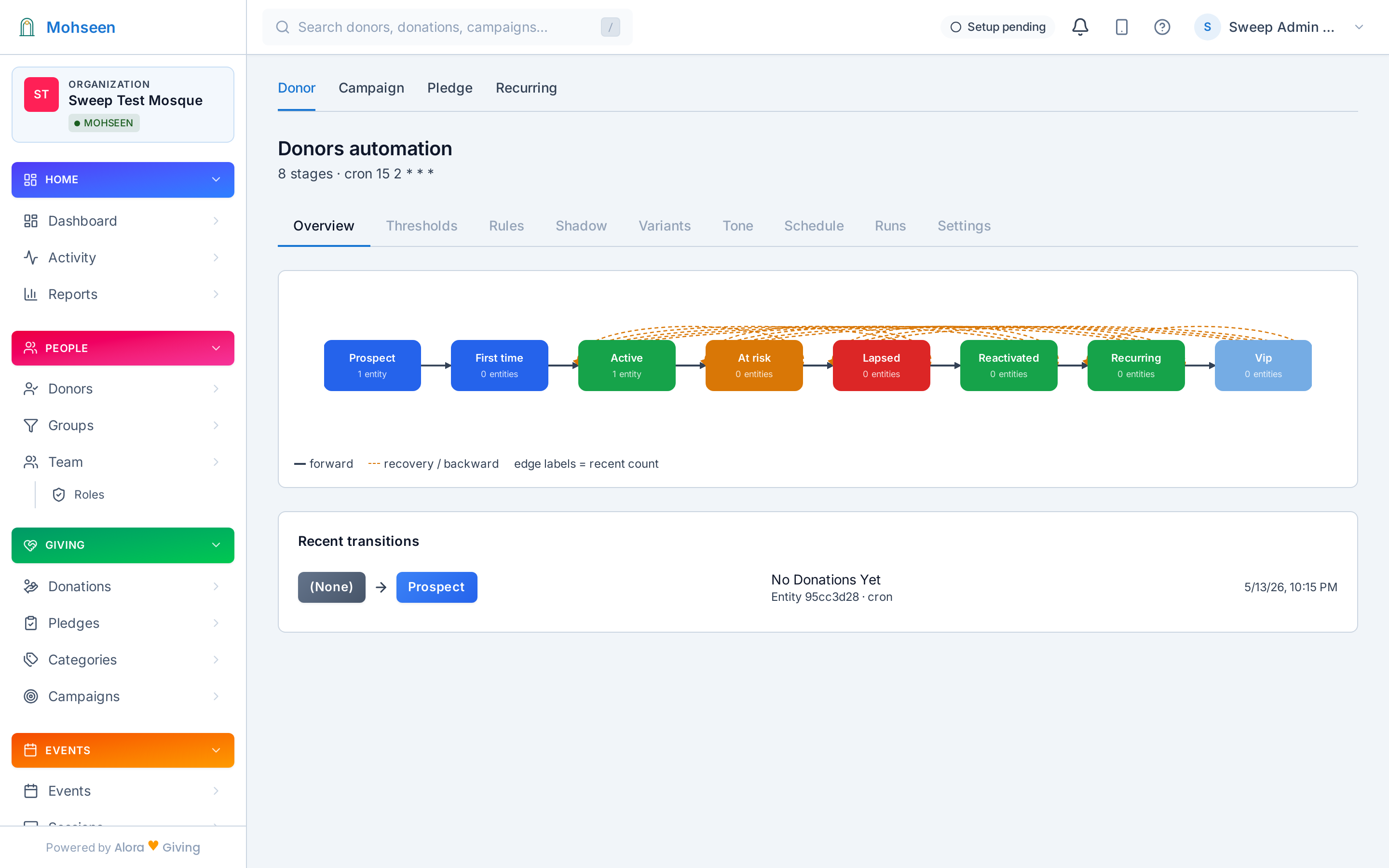
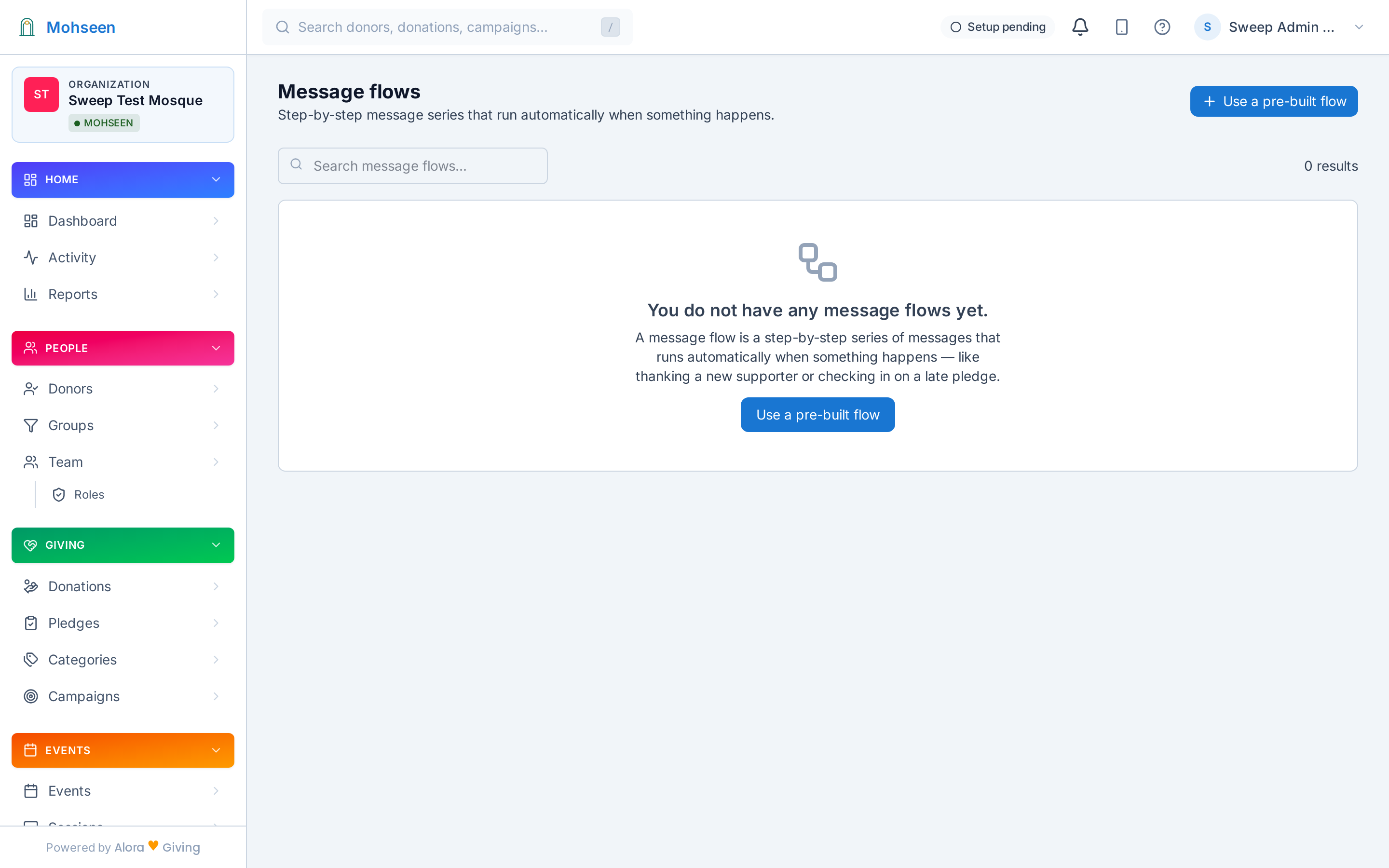
The platform walks every contributor through the whole arc — and the AI drafts every message in your masjid's own voice. Nothing ever auto-sends: your staff approves each message before it goes out.
A first sadaqah arrives and a warm welcome begins — As-salamu alaykum, an introduction to the masjid's programs, nothing more.
A thank-you within the minute, receipt attached — warm and specific, in the adab of Islamic giving, never a marketing blast.
Journeys carry a first-time contributor gently toward a small recurring sadaqah — an update on where the funds went, then a quiet invitation.
Commitment reminders, expiring cards flagged before a recurring sadaqah silently fails, and the Ramadan-to-Ramadan cycle kept whole.
When a faithful contributor goes quiet, a gentle note is drafted — and waits for your staff's approval before it sends.
Restraint is configuration, not a hope. Frequency caps and quiet hours are encoded in the platform — a contributor is never messaged twice in a week because two automations fired, and never at the wrong hour. Adab over urgency, by default.


Privacy as the default adab
Islam honours the giver whose left hand does not know what the right hand has given. Knowing your contributors well means guarding what you know — so concealment is the default in the data model, not a setting bolted on.
Contributors can mark any sadaqah anonymous at checkout. The sadaqah counts toward the appeal; the name stays concealed. The masjid still has what it needs for the receipt and the ledger.
On recognition walls and live appeal feeds, each contributor chooses how they appear — full name, first name only, or simply “a contributor”. Their choice, every time.
Prayer-hall and lobby screens (early access) never show contributor names unless the masjid deliberately turns that on. The default is totals only — generosity without spectacle.
Export-on-request, deletion-on-request, consent tracking. When a contributor asks to be erased, their personal details are stripped from every read path — right-to-erasure honoured at the data layer.
Every sadaqah, profile change, and role assignment recorded in a tamper-evident, hash-chained audit log — re-verified continuously and exportable for your shura and your auditors.
What changes after Jumu'ah
Contributor care done well does not add work — it removes it. Three standing items come off the office to-do list for good.
Compile annual statements by hand at tax time
Per-contributor annual statements with country-aware receipts generate themselves from the record — and any contributor can download theirs from My Giving, any day of the year, zakat cleanly separated.
Field calls after Jumu'ah to change a recurring sadaqah
Pause, resume, new amount, new card or wallet — contributors handle it themselves in the portal, and the record updates instantly. The office hears about it only if it wants to.
Reset forgotten passwords
Passwordless sign-in means there are no contributor passwords — not to forget, not to reset, not to leak. A code by phone or email is the entire sign-in, for every generation of the community.